Vaginal Probiotics for UTI and Yeast Infections: What the Research Shows

If you’ve ever dealt with recurring UTIs or Candida yeast infections, you know how frustrating and uncomfortable it can be. Research shows that specific vaginal probiotics for UTI and yeast infections can also benefit overall women’s health, helping restore balance after antibiotics and support both gut and vaginal microbiomes naturally.

While antibiotics often clear up infections temporarily, they can also disrupt the delicate vaginal and gut microbiomes, leaving women vulnerable to recurring problems. This post explores the science behind probiotic strains, cranberry, and D-mannose, and what clinical studies say about preventing infections naturally.

Vaginal microbiome and UTI and yeast infections

How Antibiotics Disrupt the Vaginal Microbiome

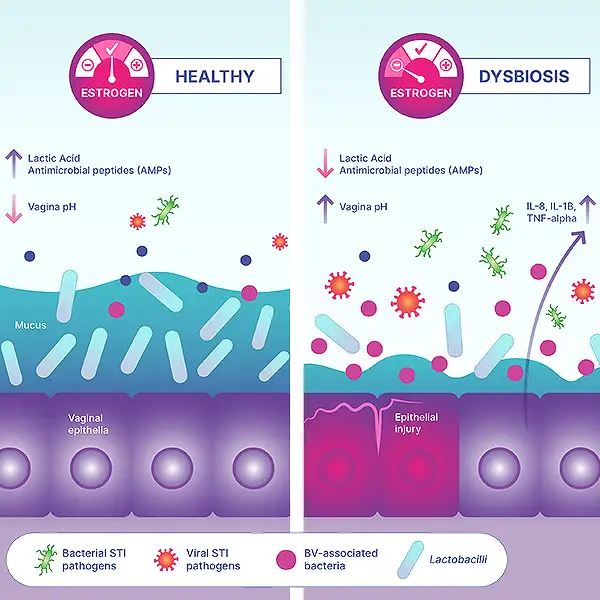
Antibiotics are powerful tools, but they don’t discriminate. They wipe out good and bad bacteria alike — not just in the gut but also in the vagina. When protective Lactobacillus species are destroyed, vaginal pH rises, creating a perfect environment for yeast and UTI-causing bacteria like E. coli to multiply.

This imbalance, known as vaginal dysbiosis, can occur after even a short course of antibiotics or following gut infections such as C. difficile.

The Gut–Vaginal Microbiome Connection

Your gut microbiome and vaginal microbiome are deeply connected. When the gut remains imbalanced — a condition known as dysbiosis — it can continually reseed the urinary and vaginal areas with unwanted microbes.

In fact, studies show that gut overgrowths of E. coli or Klebsiella (common in IBS) are linked to recurring urinary tract infections, while reduced beneficial bacteria can make it easier for Candida albicans yeast to overgrow. Restoring gut health helps stabilize vaginal pH and supports long-term protection.

Vaginal probiotics for UTI and yeast infections

Natural Remedies Supported By Research

D-Mannose:
A natural sugar, D-mannose helps prevent E. coli bacteria from sticking to the bladder wall.
Clinical trials, including one comparing D-mannose with nitrofurantoin (Kranjčec et al., 2013), found that both reduced UTI recurrence at nearly the same rate — but D-mannose caused fewer side effects and was better tolerated [PMC8944421].

Cranberry Extract:
Cranberry’s proanthocyanidins (PACs) also prevent bacterial adhesion and help break down biofilms where pathogens hide.
A 2023 Cochrane review of 50 clinical trials (8,857 participants) found cranberry products lowered the risk of recurrent UTIs by about 30%. (doi: 10.1002/14651858.CD001321.pub6)

Probiotics for Vaginal and Urinary Balance
Research shows that certain vaginal probiotics — including Lactobacillus rhamnosus GR-1, L. reuteri RC-14, L. crispatus, and L. acidophilus — can reduce infection risk and restore a healthy microbiome after antibiotics.
In one large study of postmenopausal women, probiotics offered almost the same UTI protection as daily antibiotics but with fewer side effects (Beerepoot et al., 2012). Other studies confirm these strains help maintain a balanced vaginal pH and discourage yeast overgrowth.

How These Probiotic Strains Work

Each Lactobacillus species plays a unique role in the vaginal microbiome:

L. rhamnosus GR-1: Helps lower vaginal pH and block harmful bacteria from attaching.

L. reuteri RC-14: Supports mucosal immunity and discourages Candida from adhering to vaginal cells.

L. crispatus: One of the dominant species in healthy women, promoting long-term resilience.

L. acidophilus LA-5: Shown to help control yeast overgrowth; one related strain performed similarly to fluconazole for improving symptoms (Mollazadeh et al., 2022).

Together, these specific strains help the body restore microbial harmony without contributing to antibiotic resistance. The Vaginal Balance probiotic has been formulated with these four specific strains plus it has added cranberry extract for additional vaginal and urinary support.


Key Takeaway

Clinical studies show that vaginal probiotics for UTIs and yeast infections can significantly reduce recurrence rates, restore beneficial Lactobacillus species, and support natural pH balance — without the risks associated with long-term antibiotics.

– In published trials, beneficial Lactobacillus species in the vaginal microbiome increased by almost 200% after one month of consistent use*, with continued improvement after three months.

– Researchers also observed a beneficial 58% drop in vaginal pH* – and also noted a significant reduction in discomfort and odor*, confirming these strains help support a balanced and healthy vaginal environment.

– These strains have also been clinically shown to survive the digestive tract* and successfully colonize the vaginal microbiome. When taking this probiotic by mouth, it typically takes about one to two weeks for these strains to reach and populate the vaginal area.

If you’re recovering from antibiotic use or dealing with chronic imbalance, rebuilding your microbiome through diet, lifestyle, and targeted probiotics may offer lasting results.

* These probiotic findings come from the ASTARTE™ clinical program Laue et al. (2018) and Anoshina et al. (2016)

Start Your Healing Journey

Shop Our Women’s Probiotics

References

1. Beerepoot MA, et al. Lactobacilli vs antibiotics to prevent urinary tract infections. Arch Intern Med. 2012;172(9):704-712.
2. Kranjčec B, et al. D-mannose powder for prophylaxis of recurrent urinary tract infections in women. World J Urol. 2014 Feb;32(1):79-84. [PMC8944421]
3. Cochrane Database Syst Rev. 2023; CD001321.pub6 (Cranberry and UTI Prevention).
4. Mollazadeh S, et al. Comparative efficacy of Lactobacillus strains and fluconazole for vulvovaginal candidiasis. Mycoses. 2022.
5. Laue C, et al. ASTARTE™ clinical studies on vaginal microbiota restoration. 2018

Health Disclaimer

These statements have not been evaluated by the Food and Drug Administration. The information on this website is not intended as medical advice or to diagnose, treat, cure, or prevent any health condition or disease. Any products mentioned are not intended to diagnose, treat, cure or prevent any disease. The information and products on this website and any affiliated websites are provided for educational purposes only to augment consultation with a qualified doctor or healthcare professional. Our products and information are are not intended to replace a physician-patient relationship and should not be used as a substitute for professional medical treatment or diagnosis. Be sure to consult with a healthcare professional before using any of the information or products on this website. See our full terms of use for details.

Shopping Cart
Scroll to Top